What You'll Need
- Tor Browser
- This specialized browser is essential for routing your internet traffic through the Tor network, providing anonymity by encrypting and relaying your connection through multiple servers worldwide [3].
- Reliable Internet Connection
- A stable connection is necessary for the Tor Browser to function effectively, as the multi-layered encryption and relay process can inherently slow down browsing speeds [3].
- Virtual Private Network (VPN)
- Using a VPN before connecting to Tor can add an extra layer of privacy by hiding your initial IP address from your Internet Service Provider (ISP), though it's not strictly required for basic access [1].
- Time and Patience
- Connecting to the Tor network and navigating dark web sites often takes longer than regular browsing due to the network's design, requiring users to be prepared for slower load times [3].
Step-by-Step Guide: How to Access the Dark Web Safely
Step 1: Download Tor Browser from the Official Source
Visit torproject.org and download Tor Browser for your operating system — it's available for Windows, macOS, Linux, and Android2. Never download Tor from third-party sites or app stores, as unofficial versions often contain malware designed to compromise your anonymity. For iOS users, the Tor Project recommends Onion Browser instead, though it cannot offer the same privacy protections due to Apple's Webkit requirement4. After downloading, verify the installer's signature if you know how; if not, at least confirm the URL shows 'torproject.org' before clicking download.
Step 2: Install and Launch Tor Browser Without Modifications
Run the installer and launch Tor Browser once installation completes. On the first launch, you'll see a connection screen — click 'Connect' if you're in a country without Tor restrictions, or 'Configure' if you need to use a bridge to bypass censorship. Wait 10–60 seconds for Tor to establish a secure connection through its network of relays. You'll know it's ready when the browser opens to a welcome page showing a '.onion' address in the URL bar and a confirmation message that you're connected to Tor.
Step 3: Keep Default Browser Settings to Avoid Fingerprinting
Do not resize the Tor Browser window from its default dimensions, as unusual window sizes make you stand out among other Tor users and enable fingerprinting2. Do not install any browser extensions or add-ons — each one creates a unique fingerprint and potential leak point2. Leave the security level at 'Standard' unless you encounter broken sites, in which case you can adjust it via the shield icon in the address bar. These defaults exist to make every Tor Browser user look identical to network observers.
Step 4: Navigate to .onion Sites Using Verified Directories
Type or paste a '.onion' address directly into the Tor Browser address bar — these 56-character v3 addresses work only through Tor and cannot be accessed via regular browsers. Start with trusted directories or link collections rather than searching randomly, as many dark web search engines index outdated or malicious sites. Be aware that older 16-character v2 onion addresses no longer work on the modern Tor network5. If a site fails to load, wait a minute and refresh — Tor routing can be slow, and .onion services sometimes go offline without warning.
Step 5: Never Log Into Personal Accounts or Download Files Carelessly
Do not log into any account tied to your real identity — email, social media, or payment services — while using Tor, as this directly links your real identity to your Tor session and negates anonymity2. If you must download a document or file, open it offline or inside a virtual machine, because PDFs and executables can 'phone home' through your normal internet connection and leak your real IP address2. Treat every download as potentially hostile until you've verified it in isolation.
Step 6: Verify Successful Access and Troubleshoot if Needed
You've successfully accessed the dark web when you can load a '.onion' site and see content in Tor Browser, with the address bar showing the full 56-character onion address and the connection icon displaying a green padlock. If sites won't load, check that Tor is still connected (look for the onion icon in the toolbar), try a different '.onion' address from a known directory, or restart Tor Browser to establish a fresh circuit. Remember that accessing the dark web itself is not illegal1, but your safety depends on not revealing your identity, not downloading suspicious files, and not engaging in illegal activity.
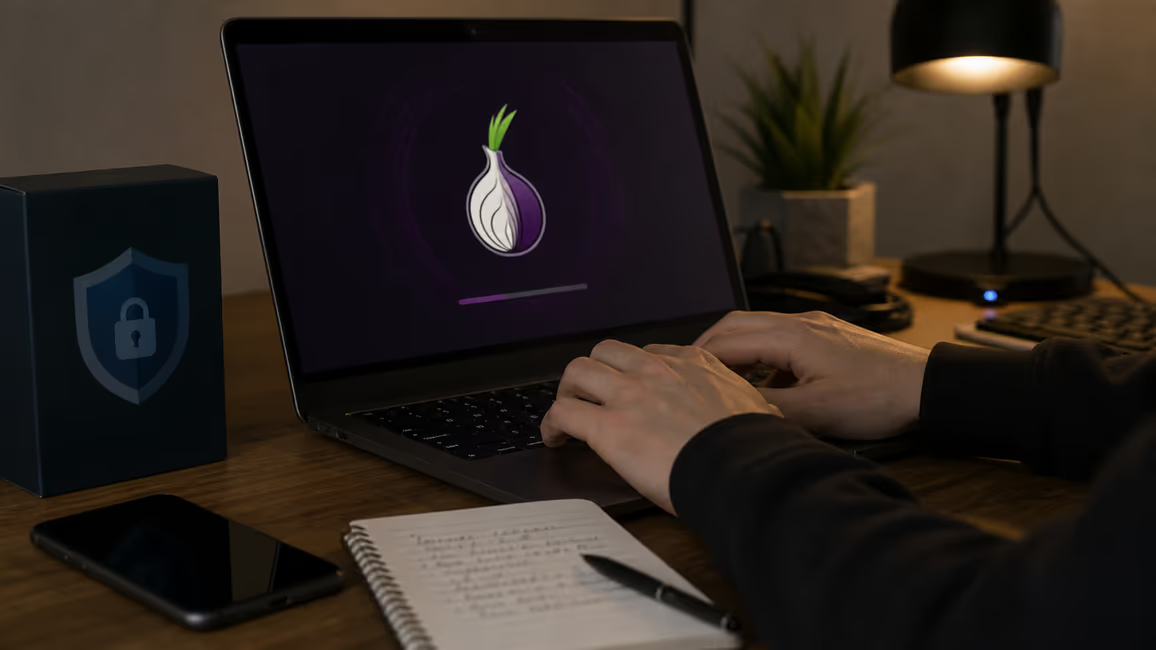
Understanding the Dark Web and Why Access It
The dark web is a segment of the deep web where content is intentionally concealed and generally requires special software like Tor to access3. To put this in perspective: the surface web — everything indexed by Google and accessible through standard browsers — represents a tiny fraction of the internet, while the deep web includes all unindexed content like password-protected databases, private corporate intranets, and medical records. The dark web sits within this deep web, deliberately hidden behind encryption and accessible only through specialized tools. Contrary to popular assumptions, only about 0.01% of internet information exists on the dark web, making it a niche rather than a parallel internet.
Accessing the dark web is not illegal in itself1. Legitimate reasons include protecting privacy in surveillance-heavy environments, circumventing censorship in countries where free speech is restricted, and enabling journalists to communicate with sources who risk retaliation for speaking publicly. Activists in authoritarian regimes use Tor to organize without government monitoring, while researchers study cybercrime trends and security vulnerabilities that emerge in these hidden spaces. The technology underpinning this access — Tor — routes your connection through multiple encrypted relays, making it extremely difficult for anyone to trace your activity back to your physical location.
We recommend understanding this context before proceeding: the dark web is neither inherently criminal nor a guaranteed safe haven. Your anonymity depends entirely on how you configure and use the tools, not on the network itself. For a deeper explanation of how Tor fits into the broader ecosystem, see What is the Dark Web? A Comprehensive Overview.
Essential Preparations Before Accessing the Dark Web
Before launching Tor Browser, we recommend evaluating three foundational choices that determine your level of anonymity and safety: your operating system, whether to use a VPN, and which security practices to adopt from the start. These decisions matter because Tor alone does not protect you from mistakes like logging into personal accounts2 or opening malicious files that leak your real IP2 — the browser provides the infrastructure, but your operational discipline determines whether that infrastructure actually keeps you anonymous.
Operating System Considerations
Most users access the dark web directly from Windows, macOS, or Linux without additional isolation, which works for casual browsing but leaves you vulnerable if you download files or encounter exploits. For higher-risk scenarios — such as handling sensitive documents or accessing sites with unknown trustworthiness — consider running Tor Browser inside a virtual machine (VM) or using a privacy-focused live operating system like Tails or Whonix. A VM creates a sandboxed environment: if malware executes, it cannot easily reach your host system or real IP address. Tails boots from a USB stick, routes all traffic through Tor by default, and leaves no trace on your computer after shutdown, making it the strongest option for journalists or activists. Whonix runs two VMs — one gateway that handles all Tor connections, one workstation where you browse — so even if the workstation is compromised, your real IP remains hidden behind the gateway. The trade-off is complexity: VMs and live systems require setup time and basic technical comfort, whereas launching Tor Browser on your main OS takes seconds.
VPN Usage: When It Adds Value and When It Doesn't
Using a VPN with Tor is recommended, especially in countries with strict online censorship, to hide the fact that you are using Tor from your ISP and to add an extra layer of security by hiding your IP from the Tor entry node6. This configuration — VPN first, then Tor — prevents your internet provider from seeing that you connected to the Tor network, which can be useful if Tor usage itself draws scrutiny or if your ISP blocks Tor entry nodes. The VPN sees your real IP but not your Tor traffic content; the Tor entry node sees a VPN IP instead of your real one; and the destination site sees only the Tor exit node. However, the Tor Project generally recommends that most people do not use a VPN with Tor because they often need to be manually configured and users can simply forget to turn them on7. If you choose this route, connect to your VPN before launching Tor Browser, and verify the VPN is active each session — a forgotten VPN negates the benefit and creates a false sense of security.
Security Hygiene from the First Session
Adopt these practices immediately, not after your first mistake. Do not resize the Tor Browser window from its default size to blend in with other users and avoid fingerprinting2. Do not install browser add-ons in Tor Browser, as each extension can be a fingerprint and a potential leak2. Logging into accounts tied to your real identity through Tor does not anonymize you and links your real account to your Tor session2 — this includes Gmail, Facebook, or any service where you've provided personal information during registration. If you must download a file, open it offline or inside a VM: documents, PDFs, and executables downloaded from the dark web can 'phone home' through your normal connection when opened, leaking your real IP address2. One scenario illustrates the stakes: you download a PDF whitepaper from a .onion site, open it in your regular PDF reader on your main OS, and the embedded tracker silently connects to an external server through your non-Tor connection, associating your real IP with the document request. The fix is opening files only in an isolated environment or after disconnecting from the internet, but the consequence of skipping this step is immediate deanonymization.
For most users starting out, the practical baseline is: use Tor Browser on your main OS without a VPN, follow the default settings strictly, never log into personal accounts, and treat every download as hostile until verified offline. If your threat model includes state-level surveillance or you handle sensitive material, add a VPN and run Tor inside a VM or Tails. The dark web itself is not inherently dangerous1, but careless preparation converts a privacy tool into a liability.
Step-by-Step Guide: Accessing the Dark Web with Tor Browser
Downloading and installing Tor Browser is straightforward, but small deviations from the official process introduce serious risks — fake versions bundled with malware, compromised mirrors that log your activity, or outdated builds with unpatched vulnerabilities. The Tor Browser is available for Windows, macOS, Linux, and Android, and should only be downloaded from torproject.org or explicitly endorsed mirrors to avoid malware2. We recommend navigating directly to the official site rather than clicking search engine ads or third-party download portals, which occasionally impersonate the Tor Project to distribute trojaned installers. Once you've downloaded the installer, verify its cryptographic signature if you have the technical skill — the Tor Project publishes GPG signatures alongside each release, allowing you to confirm the file hasn't been tampered with during transit. Most users skip this step without immediate consequence, but for high-stakes scenarios, signature verification is the only reliable proof of authenticity.
Platform-Specific Considerations
For iOS, there is no official Tor Browser; the Tor Project recommends Onion Browser, which uses Tor routing but cannot offer the same privacy protections as Tor Browser due to Apple's Webkit requirement4. This limitation matters because iOS forces all browsers to use Apple's rendering engine, preventing the Tor Project from implementing the full suite of anti-fingerprinting defences present in the desktop version. Onion Browser provides Tor routing — your traffic goes through the Tor network — but cannot prevent certain types of browser fingerprinting or guarantee the same level of isolation between tabs. If you need strong anonymity on a mobile device, Android with the official Tor Browser is the better choice; if iOS is your only option, understand that Onion Browser is a compromise, not a full equivalent.
Common Installation Pitfalls and How to Avoid Them
Three mistakes during installation undermine security before you ever connect. First, installing Tor Browser to a system-wide directory like 'Program Files' instead of a user folder can create permission issues and makes the browser visible to other users on shared computers — extract it to a location you control, such as your desktop or documents folder, where it runs as a standalone application. Second, launching Tor Browser immediately after installation without checking your system clock: Tor's cryptographic protocols require accurate time synchronisation, and a clock skewed by more than a few minutes can prevent connection to the network or expose you to certain attacks. If Tor fails to connect on first launch, verify your system time matches your actual timezone before troubleshooting further. Third, modifying browser settings or installing extensions during or immediately after setup negates the fingerprinting protections built into the default configuration2 — resist the urge to 'improve' Tor Browser with ad blockers, themes, or custom fonts, as these changes make you uniquely identifiable.
Troubleshooting Connection Failures
If Tor Browser fails to connect after launch, the issue typically falls into one of three categories: network interference, outdated bridge configuration, or local firewall rules. Check whether your ISP or local network blocks Tor by attempting to connect from a different network — a mobile hotspot, public Wi-Fi, or a friend's connection — and if Tor works elsewhere, your primary network is filtering Tor traffic. In censored regions, configure Tor to use bridges (obfuscated entry points not listed in the public Tor directory) via the connection settings screen that appears on first launch or through the onion icon in the toolbar. If your firewall or antivirus software blocks Tor, you'll see connection timeouts or warnings about 'suspicious network activity' — whitelist Tor Browser in your security software or temporarily disable the firewall to test, then re-enable it and add a specific exception. Older 16-character v2 onion addresses no longer work on the modern Tor network5, so if you're testing connectivity by visiting a saved .onion link and it fails, try a known-working v3 address (56 characters) from a current directory instead of assuming Tor itself is broken.
For a broader comparison of access methods and browser options, see Best Dark Web Browser: A Comparison.
Navigating the Dark Web: Finding .onion Sites and Best Practices
Finding .onion sites presents an immediate challenge: there is no central index, no Google equivalent that crawls and ranks hidden services, and many addresses change or disappear without notice. Users typically start with three methods — curated directories like The Hidden Wiki, dark web search engines such as Ahmia or Torch, or direct links shared through trusted channels — but each carries distinct reliability and safety trade-offs. The Hidden Wiki functions as a community-maintained list of categorised .onion links, covering markets, forums, privacy tools, and informational resources, but anyone can edit entries, so outdated or malicious links appear alongside legitimate ones. Ahmia indexes .onion sites that meet basic ethical criteria (no child abuse content) and provides a clearnet search interface, making it accessible even before you launch Tor Browser for research. Torch claims a larger index but applies no content filters, meaning search results can surface illegal services or scam sites without warning. Direct links from established forums or security researchers offer higher trust but require you to already know where to look — a circular problem for newcomers.
Why Many .onion Sites Are Unreliable or Temporary
Expect frequent downtime and dead links: hidden services run on volunteer infrastructure, often from home connections or ephemeral servers, and administrators take sites offline without notice to avoid law enforcement, migrate to new addresses, or simply abandon projects. Older 16-character v2 onion addresses no longer work on the modern Tor network5, so any directory or bookmark list that hasn't been updated since 2021 will contain exclusively broken links. This impermanence matters because it trains you to verify each site independently rather than trusting saved bookmarks, and it explains why experienced users maintain multiple sources for the same service — if one mirror goes down, another may still be reachable. Scammers exploit this churn by cloning legitimate sites at similar addresses, changing one or two characters in the .onion URL to capture users who mistype or follow outdated links.
Safe Browsing Practices Within Tor Browser
Adopt these habits for every session, not selectively. Do not resize the Tor Browser window from its default size to blend in with other users and avoid fingerprinting2 — maximising or adjusting dimensions creates a unique screen resolution signature that can track you across sites. Do not install browser add-ons in Tor Browser, as each extension can be a fingerprint and a potential leak2, even privacy-focused tools like additional ad blockers or password managers. Logging into accounts tied to your real identity through Tor does not anonymise you and links your real account to your Tor session2, so avoid Gmail, social media, or any service where you've provided personal information during registration. Documents, PDFs, and executables downloaded from the dark web can 'phone home' through your normal connection when opened, leaking your real IP address2 — open files only offline, inside a virtual machine, or after verifying they contain no embedded network requests. Phishing attempts on the dark web mimic legitimate services with near-identical .onion addresses or login pages; always double-check URLs character by character before entering credentials, and never reuse passwords from clearnet accounts.
For further context on how .onion addresses work and why they look the way they do, see Tor Web: Understanding the Basics.
Reliability and Security Considerations for Dark Web Access
Not all methods of accessing the dark web offer equal protection, and marketing claims often obscure critical limitations. Tor Browser on desktop remains the most reliable option because the Tor Project controls the entire stack — routing, browser hardening, and anti-fingerprinting defences — but alternatives introduce compromises that matter for security. For iOS, there is no official Tor Browser; the Tor Project recommends Onion Browser, which uses Tor routing but cannot offer the same privacy protections as Tor Browser due to Apple's Webkit requirement4. This means your traffic routes through Tor, but the browser itself cannot prevent certain fingerprinting techniques or guarantee tab isolation, weakening anonymity compared to the desktop version. If you see a 'dark web browser' app on a mobile store claiming full Tor equivalence, treat the claim with scepticism — Apple's platform restrictions prevent any iOS browser from matching Tor Browser's protections, and Android apps outside the official Tor Browser often lack transparent auditing or bundle analytics that undermine privacy.
Some VPNs advertise 'dark web access' as a feature, but this phrasing misleads: a VPN alone cannot access .onion sites, which require Tor routing3. What these providers mean is that their service works alongside Tor Browser, not that it replaces it. While not strictly necessary, using a VPN with Tor is recommended, especially in countries with strict online censorship, to hide the fact that you are using Tor from your ISP and to add an extra layer of security by hiding your IP from the Tor entry node6. The Tor Project generally recommends that most people do not use a VPN with Tor because they often need to be manually configured and users can simply forget to turn them on7. If you do choose a VPN for this purpose, verify its logging policy independently — providers claiming 'no logs' have been subpoenaed and produced user data, so check whether the company has published third-party audits or been tested under legal process.
Common Security Risks and Practical Mitigation
Three threats dominate dark web security discussions: malware distribution, scam sites impersonating legitimate services, and deanonymization through user error. Malware spreads primarily through downloads — executables, PDFs, or documents that embed network requests — and the risk compounds when users open files without precaution. Documents, PDFs, and executables downloaded from the dark web can 'phone home' through your normal connection when opened, leaking your real IP address2. A PDF from a dark web forum might contain an embedded image hosted on a clearnet server; when you open it in your default viewer, the image loads through your regular connection, associating your real IP with the document request. The mitigation is opening files only offline, inside a virtual machine, or after inspecting them with tools that reveal network calls, but many users skip this step and deanonymize themselves immediately. Scam sites exploit .onion address complexity by registering URLs that differ by one character from legitimate services, capturing credentials or cryptocurrency from users who mistype or follow outdated links. Always verify addresses through multiple independent sources, and never trust a link from a single forum post or unverified directory entry.
Deanonymization attempts target behaviour more than technology. Logging into accounts tied to your real identity through Tor does not anonymise you and links your real account to your Tor session2, so accessing Gmail, social media, or any service where you've registered with personal information negates Tor's protections entirely. Even without logging in, browser fingerprinting can track you if you modify Tor Browser's default settings — installing add-ons, resizing the window, or changing fonts creates unique identifiers2. The practical defence is strict adherence to defaults: no extensions, no window resizing, no personal account logins, and treating every site as potentially hostile.
Legal Status and Jurisdictional Variation
Accessing the dark web is not illegal in itself1, but this statement requires jurisdictional nuance. In the United Kingdom, the United States, and most European countries, using Tor Browser and visiting .onion sites is lawful; illegality arises from what you do on those sites, not the act of access. Some nations with restrictive internet policies treat Tor usage as suspicious or ban anonymisation tools outright, making even connection to the Tor network a legal risk. We recommend verifying local laws before your first connection, particularly if you reside in or travel to regions with strict online censorship. The distinction matters because law enforcement in permissive jurisdictions focuses on criminal activity conducted through Tor — purchasing illegal goods, distributing prohibited material — rather than access itself, but in restrictive jurisdictions, the mere presence of Tor Browser on your device can trigger investigation.
For a broader overview of what the dark web encompasses and why its legal status varies, see What is the Dark Web? A Comprehensive Overview.
Verifying Information and Staying Safe
No central authority validates content on the dark web, so every claim, link, and service requires independent verification before you act on it. Cross-reference .onion addresses through multiple directories — if Ahmia, The Hidden Wiki, and a trusted forum all list the same URL for a service, confidence increases, but a single unverified link from an anonymous post should trigger immediate scepticism. Phishing sites clone legitimate services with near-identical addresses, changing one character in the .onion string to capture credentials or cryptocurrency from users who mistype or trust outdated bookmarks. Always compare addresses character by character against known-good sources, and never assume a site is authentic because it looks professional — visual design costs little, and scammers invest heavily in mimicking trusted platforms.
Treat every document, image, or executable as potentially hostile until proven otherwise. Documents, PDFs, and executables downloaded from the dark web can 'phone home' through your normal connection when opened, leaking your real IP address2. A PDF might embed an image hosted on a clearnet server; when your default viewer loads it, the request bypasses Tor entirely, associating your real IP with the file. Open downloads only offline, inside a virtual machine, or after inspecting them with tools that reveal embedded network calls — skipping this step deanonymizes you immediately, regardless of how carefully you configured Tor Browser.
Critical thinking extends beyond technical checks: if a forum post promises 'guaranteed anonymity' or a vendor offers prices far below market rate, the claim likely conceals a scam or honeypot operation. No technology guarantees absolute anonymity, and bargains on illegal goods often signal law enforcement stings or exit scams where operators disappear with funds. We recommend starting with read-only observation — browse forums, read guides, and study how experienced users evaluate sources — before engaging in any transaction or sharing information. For ongoing security updates, monitor the Tor Project's official blog and security-focused communities that document emerging threats, but verify advice through multiple independent sources rather than trusting a single post or tutorial.
Troubleshooting Common Dark Web Access Issues
Tor Browser Fails to Connect
Reason: Tor relies on a distributed network, and sometimes the entry nodes or relays can be blocked or slow, especially in regions with heavy censorship. Incorrect system clock settings can also prevent secure connections. Fix: First, verify your system clock is accurate. Then, try using 'bridges' in Tor Browser settings. Bridges are unlisted relays that make it harder for ISPs to block your connection to the Tor network. You can request bridges directly within Tor Browser or from the Tor Project website.
Slow Connection Speeds
Reason: Tor routes your traffic through at least three relays, which inherently adds latency compared to a direct connection. Network congestion, the distance to relays, and the speed of individual relays can all contribute to slow browsing. Fix: While some slowness is normal, consistently extremely slow speeds might indicate a problem. Ensure you are not running other bandwidth-intensive applications. If speeds remain problematic, restarting Tor Browser can sometimes connect you to faster relays. Avoid downloading large files unless absolutely necessary, as this will further degrade performance.
Websites Fail to Load or Show Errors
Reason: .onion sites can be volatile; they may go offline temporarily, change their address, or be under a denial-of-service attack. Your Tor circuit might also be unstable, or the site itself could be misconfigured.
Fix: First, try refreshing the page. If that doesn't work, request a 'New Identity' in Tor Browser (the broom icon), which closes all tabs and establishes a new circuit. Verify the .onion address from multiple, trusted sources to ensure it's still active and correct. If the site remains inaccessible, it might be permanently offline.
Downloads Are Corrupted or Fail
Reason: The nature of the dark web means file hosting can be unreliable, and downloads can be interrupted due to connection drops or server issues. Corrupted files can also be a sign of malicious intent. Fix: Always download files from trusted sources and verify their integrity using cryptographic hashes (if provided) once downloaded. If a download fails, try restarting it. For large files, consider using a download manager that supports resuming interrupted transfers, though this can introduce additional risks if not configured carefully.
VPN Interferes with Tor Connection
Reason: While a VPN can be used with Tor, incorrect configuration or certain VPN settings can conflict with Tor's routing, preventing a successful connection or even exposing your IP. Fix: If you use a VPN, ensure it is connected before you open Tor Browser. Some VPNs have features like a 'kill switch' that can interfere; temporarily disable such features if you suspect a conflict. If issues persist, try connecting to Tor without the VPN first to isolate the problem. We recommend using a reputable VPN provider that explicitly supports Tor.
Your questions, answered
Which Browser can open the dark web?
The Tor Browser is the primary software designed to access the dark web. It is available for Windows, macOS, Linux, and Android, and should only be downloaded from torproject.org or explicitly endorsed mirrors to avoid malware2. Other browsers do not natively connect to the Tor network and cannot access .onion sites directly.
Can I use Tor on my iPhone?
For iOS, there is no official Tor Browser. The Tor Project recommends Onion Browser, which uses Tor routing but cannot offer the same privacy protections as Tor Browser due to Apple's Webkit requirement4. This means its anonymity features are not as robust as the desktop Tor Browser.
Is it illegal to browse on Tor?
Accessing the dark web is not illegal in itself in most jurisdictions, including the UK, US, and many European countries1. The illegality arises from specific activities conducted on the dark web, such as purchasing prohibited goods or distributing illegal material. However, some nations with strict internet censorship may consider using anonymization tools like Tor a legal risk.
What is the most private Browser?
The Tor Browser is generally considered the most private browser for accessing the dark web because it routes your traffic through multiple relays, obscuring your IP address and location. To maintain this privacy, we recommend not resizing the window from its default size and avoiding browser add-ons, as these can create unique fingerprints2. Logging into personal accounts through Tor also compromises your anonymity2.
Do I need a VPN to access the dark web?
While not strictly necessary, using a VPN with Tor is recommended, especially in countries with strict online censorship, to hide the fact that you are using Tor from your ISP6. It also adds an extra layer of security by hiding your IP from the Tor entry node6. However, the Tor Project generally recommends that most people do not use a VPN with Tor because they often need to be manually configured and users can simply forget to turn them on7.
Key Takeaways
Accessing the dark web safely requires careful preparation and a skeptical mindset. We have outlined the essential steps and precautions for your first connection.
Use Tor Browser exclusively: Download it only from torproject.org to ensure you have the official, secure version2.
Maintain default settings: Avoid installing add-ons, resizing the window, or logging into personal accounts to prevent browser fingerprinting2.
Verify
.onionaddresses: Cross-reference URLs through multiple trusted directories to avoid phishing sites.Exercise extreme caution with downloads: Open files only offline or in a secure virtual environment to prevent IP leaks2.
Understand legal nuances: Accessing the dark web is generally not illegal, but specific activities conducted there are1.
For your next step, we recommend familiarizing yourself further with the underlying technology by reading Tor Web: Understanding the Basics.
Bibliography
- Online Safeguarding: The Dark Web - What is it?
- How to access the dark web safely (2026): step-by-step — dark.cfd
- The Dark Web: An Overview
- Installing - Getting started - Tor Browser
- How to Access the Dark Web Using Tor Browser Safely
- Best VPN for the Dark Web: Safer access
- Best VPNs for the dark web in 2025